The Port of Genoa (Porto di Genova) is the busiest maritime gateway in Italy, routing over 50 million tons of freight and millions of TEUs annually. As the primary commercial node connecting Southern Europe to global trade lanes, Genoa's container terminals, bulk distribution yards, and shipbuilding sites demand unprecedented metrological reliability.
Under the international SOLAS VGM (Safety of Life at Sea - Verified Gross Mass) regulations, export containers loaded at terminals like Genoa's SECH, VTE, or PSA Voltri-Pra must undergo strict certified weighing. Furthermore, heavy manufacturing plants throughout Liguria require ultra-durable scale platforms that resist salt-fog corrosion while integrating directly into automated logistics loops.
Specialized epoxy and polyurethane paint coatings designed for high-salinity marine environments like Genoa's shoreline terminals, extending service life up to 15 years.
RFID scanner, optical plate recognition, and multi-sensor vehicle positioning options to eliminate bottleneck queues in high-traffic logistics corridors.
Our structures and load cells are meticulously developed to satisfy MID, CE, and OIML Class III accuracy ratings required by Italian commerce departments.
Years Structural OEM Experience
Global Export Destination Countries
Maximum Weighing Capacity
OIML & CE Metrology Compliance
Fujian Carpe Fitness Co., Ltd. (our parent industrial structural manufacturing facility), located in a premier coastal industrial zone of China, represents the gold standard of precision steel fabrication, structural layout, and heavy-duty load assembly. Drawing from over 15 years of producing high-durability systems that withstand immense physical stress and cyclic fatigue, our team of dedicated engineers, structural designers, and QA personnel ensures every weighbridge and digital system achieves optimal structural performance.
By blending Chinese supply chain agility and raw steel procurement advantages with strict European quality principles (OIML, CE, and ISO 9001), we manufacture highly competitive weighing solutions. Every steel section, U-beam profile, and load cell housing undergoes rigorous stress-simulation modeling, professional automatic robotic welding, and premium surface shotblasting (Sa 2.5 classification) before shipment.
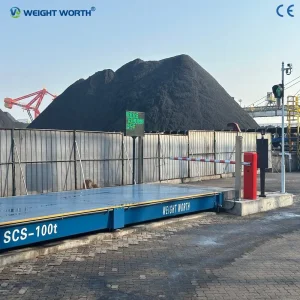
From maritime logistics to metallurgical recycling, our digital weight systems are deployed across diverse sectors in Genoa.
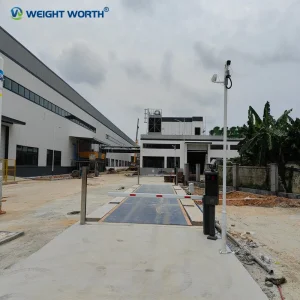
Integrating 120-ton and 200-ton static weighbridges with customs databases to streamline SOLAS VGM certification, ensuring cargo container weights are declared safely before vessel stowage.
Tough, impact-resistant weighbridges equipped with heavy-duty structural steel decks that handle dump trucks loaded with abrasive metal scraps, providing long-term reliability.
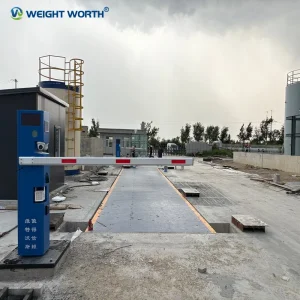
Unattended 60-ton weighbridge systems utilizing automatic license plate recognition (ALPR), digital display kiosks, and cloud platforms for round-the-clock driver-operated weighing.

Understanding structural deflection, legal metrology, and load cell physics under Mediterranean operational demands.
In heavy-duty weighing environments like Genoa's container parks, scale decks endure repeated, severe axial stress from heavy logistics. We utilize closed orthotropic U-shaped beams (6mm to 8mm thickness) rather than standard open I-beams. U-beams distribute load vectors dynamically across the entire deck plane, preventing local buckling and minimizing the structural deflection ratio to below L/800 (complying with standard European civil structural criteria).
Genoa's proximity to the Ligurian Sea means that moisture, salt-spray, and thermal fluctuations are persistent concerns. Using standard shear beam sensors leads to rapid degradation and metrological drift. Our systems implement hermetically sealed, stainless steel digital load cells with an IP68/IP69K rating. Digital load cells avoid analog signal drop, offering lightning protection, internal temperature compensation, and rapid diagnostic capability for individual nodes.
Deploying digital scales for commercial trade ("M" class marking) in Italy is regulated by Decree D.M. 93/2017. Any weighbridge system utilized in public transactions must be validated by local accredited metrological entities (Verificazione Periodica). Our factory handles pre-calibration tests to guarantee all load sensors comply with OIML R76 accuracy class III metrics, facilitating straightforward local validation.
No two facilities share the same layout. We provide complete layout tailoring, ensuring your physical weighbridge platforms line up perfectly with existing civil structures.
From compact 3x12m designs for regional logistics to modular 3x24m configurations designed for high-capacity multi-trailer transport.
Tailored paint colors, safety striping, and thick marine-grade coatings that withstand highly corrosive industrial salt fog.
Native output support for Modbus TCP, Profinet, Ethernet/IP, and serial protocols, facilitating connectivity with legacy terminal systems.
Analyzing the major technologies reshaping the metrology and maritime scale sector.
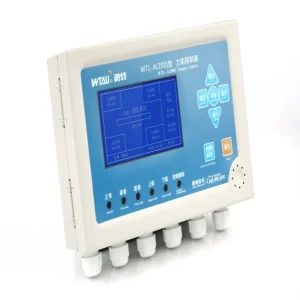
Next-generation weight indicators employ onboard AI to analyze structural micro-deflection patterns, identifying sensor anomalies before they lead to weighing errors.
Modern terminal operations link weight readouts directly to regional transport networks, allowing cargo operators to monitor weight trends across Europe in real-time.
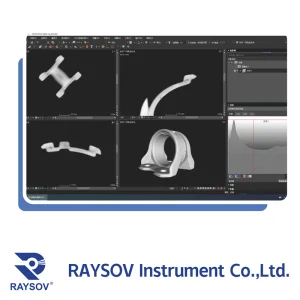
Utilizing high-frequency X-ray scanning within structural components during production, ensuring internal structural seams remain defect-free before installation.
Answers to common logistical, structural, and regulatory questions regarding digital weighing systems.
Under the MID (Measuring Instruments Directive 2014/32/EU), all scales used for transactional trade must be metrologically certified to OIML Class III standards. Our production processes conform strictly to these certification pathways, enabling smooth integration with Italian customs verification.
We mitigate corrosion by utilizing high-grade structural steel, shotblasting to Sa 2.5 classification, applying marine-grade epoxy coatings, and installing stainless-steel IP68/IP69K load cells. This keeps our systems robust against high salinity and moisture.
Yes. Our smart indicators feature open APIs and industrial network cards (Modbus, Profinet, Ethernet) that communicate directly with central warehouse management and ERP databases.
Closed orthotropic U-beams form a rigid structural box section when welded to the top deck plate. This configuration resists torsional stress and load concentrations much better than open-sided I-beams, preventing long-term deck warping.
Our digital load cells continuously output independent diagnostic values to the weighing indicator. If a particular sensor experiences physical issues or signal drift, a remote technician can quickly isolate the affected channel online, minimizing downtime.
Discuss your logistical challenges, structural layout requirements, and regulatory standards with our engineering specialists. Let us supply you with robust, certified weighing platforms built to last.
 Carpe fitness