2026 Top Guide How to Lubricate a Treadmill Belt Without a Kit?

Time:2026-09-24 Author:Aria
0%

A squeak under your feet can make a treadmill feel older than it is. Sometimes, a dry belt is the cause, but noise can also come from loose parts or a worn deck. This guide explains how to lubricate a treadmill belt without a kit, while keeping the machine and its warranty in mind. A kit is not always essential. The correct lubricant is.

Before touching the belt, unplug the treadmill and check its user manual. Many models require a specific, treadmill-safe silicone lubricant; others have self-lubricating decks that should not be treated. Do not assume that cooking oil, WD-40, or a random household spray is a suitable substitute. It may seem convenient. It can also damage the belt or deck. If the manual is missing, look up the exact model or contact the manufacturer rather than guessing.

The basic process is usually simple: lift the belt edge, apply a small amount of approved lubricant beneath it, and spread it as directed by the manufacturer. Then reconnect the power and run the treadmill at low speed, if the manual recommends doing so. A little is often enough. Too much lubricant can make the belt slippery or attract dirt, and wiping away excess may be needed. The steps can vary between machines, so this guide will point out where model-specific instructions matter. Even careful maintenance is not a cure for every problem; a persistent squeak or uneven belt may need inspection. I would not treat lubrication as a fix for obvious damage. That distinction is easy to miss.
2026 Top Guide How to Lubricate a Treadmill Belt Without a Kit?

Check the Treadmill Manual and Confirm the Required Lubricant

Before lubricating a treadmill belt without a kit, check the owner’s manual. It identifies the lubricant type, application points, and whether the belt needs lubrication at all. Some decks require silicone-based products; others may be damaged by them. Do not assume household oil is suitable. A wrong lubricant can leave residue, attract dust, or affect belt grip. If the manual is missing, look for the machine’s model information and contact its manufacturer or a qualified repair technician before applying anything.

This check matters for safety, not just upkeep. The U.S. Consumer Product Safety Commission’s National Electronic Injury Surveillance System recorded an estimated 22,500 treadmill-related emergency-department visits in 2019. That figure does not link injuries to lubrication, but it underscores the need to follow equipment instructions. Unplug the treadmill before inspecting the deck, and never pour lubricant onto a moving belt.

Tips:

Check the manual’s lubricant specification and warranty notes. Apply only the stated amount, in the stated locations. A little patience helps. Wipe away drips, then test the belt at low speed. If it slips, smells unusual, or runs unevenly, stop; adding more lubricant may not fix the problem. Manuals can be vague, and that is frustrating. When instructions conflict, ask a service professional rather than guessing.

Unplug the Treadmill and Prepare the Belt for Lubrication

Before touching the treadmill, switch it off and unplug it from the wall. Do not rely on the console’s stop button; the belt and rollers can still move if power remains connected. Move the safety key aside, then give the machine a moment to settle. A quiet room helps you notice loose parts or unusual sounds. Check the owner’s manual before lifting the belt, because some models do not need lubrication or require a specific lubricant. Guessing can cause problems.

Clear the floor around the treadmill and wipe away dust, grit, and pet hair. Use a dry, lint-free cloth on the exposed belt and frame. Avoid soaking the belt or spraying household cleaner near the deck. With clean, dry hands, gently lift one side of the belt to see whether there is enough space to reach underneath. Don’t force it. If the belt feels unusually tight, or you hear a scrape when moving it by hand, stop and check the manual or contact a qualified technician. A small flashlight can help you inspect the deck. It is easy to miss a crumb. I once assumed a belt was ready after a quick wipe; a second look would have caught dust near the edge. Keep the lubricant nearby, but wait to apply it until you have confirmed the treadmill’s instructions.

2026 Top Guide: How to Lubricate a Treadmill Belt Without a Kit? — Unplug the Treadmill and Prepare the Belt for Lubrication
Step What to Do Practical Details Safety Check
1. Check the manual Confirm whether the treadmill’s walking belt requires lubrication and identify the lubricant specified by its manufacturer. Some treadmills have maintenance-free or pre-lubricated decks. Follow the model’s instructions and service interval rather than lubricating on a fixed schedule. Do not lubricate a belt or deck that the manual says must remain dry.
2. Unplug the treadmill Switch off the treadmill, remove its plug from the electrical outlet, and wait for the belt to stop completely. Keep the power cord disconnected throughout cleaning and lubrication. Never work beneath or beside a moving belt, or rely only on the console’s stop button.
3. Clear the area Move nearby objects away and make sure the treadmill is stable on a level surface. Allow enough room to access both sides of the walking belt and deck. Keep children and pets away while performing maintenance.
4. Inspect the belt and deck Look for tears, fraying, unusual wear, or objects caught beneath the belt. Remove loose dust and debris with a clean, dry, lint-free cloth. Do not use water or household cleaners unless the manual permits them. If the belt is damaged or the deck is visibly worn, stop and arrange service rather than applying lubricant.
5. Prepare the belt Gently raise one edge of the belt only as far as needed to access the deck surface underneath. Work from the side, following the manual’s access instructions. Do not loosen belt-adjustment bolts unless directed. Do not force the belt upward or place fingers near rollers or pinch points.
6. Prepare suitable lubricant Use only the type of treadmill lubricant approved for the specific model, commonly a treadmill-grade silicone lubricant when specified. A separate bottle may be used instead of a maintenance kit. A kit is not a substitute for checking compatibility. Do not use cooking oil, motor oil, petroleum-based products, or general-purpose spray lubricants unless the manual explicitly approves them.
7. Before applying Follow the product and treadmill instructions for the exact amount and placement. Application methods and quantities vary by treadmill; there is no universal dose. Avoid getting lubricant on the top walking surface or floor. Keep lubricant away from electrical parts, the motor, and exposed connectors.

Lift the Belt and Apply a Small Amount of Treadmill-Safe Lubricant

Unplug the treadmill and let the belt stop completely. Check the owner’s manual before applying anything; some walking belts need no lubricant, and others require a specific type. “No kit” does not mean using cooking oil, spray lubricant, or whatever is in the garage. Use only a treadmill-safe lubricant approved for your machine.

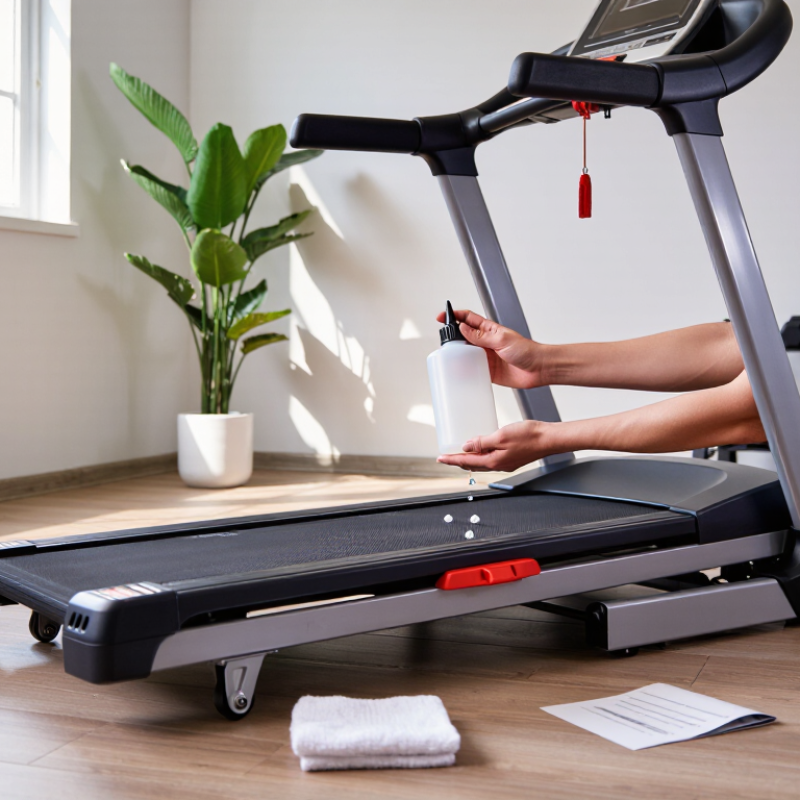
Lift one side of the belt gently, just enough to reach underneath without forcing it. Apply a small amount to the deck, following the manual’s pattern—often a thin line near the center rather than a puddle. Less is better. Repeat on the other side if the instructions call for it, then lower the belt and wipe away any drips. It can feel awkward at first.

Reconnect the treadmill and walk slowly for a few minutes to spread the lubricant. Keep your feet clear of the edges, and stop if the belt slips or makes an unusual sound. I once assumed more lubricant would solve a noisy belt; it only made cleanup harder. If the noise continues, check belt alignment and tension, or ask a qualified technician rather than adding more.

How to Lubricate a Treadmill Belt Without a Kit

Lift the belt and apply a small amount of treadmill-safe lubricant.

This chart counts the basic actions in each stage: unplug the treadmill before servicing, lift the belt, apply lubricant approved for your treadmill, then lower the belt. Follow your owner’s manual for lubricant type and amount; requirements vary by model.

Spread the Lubricant Evenly Beneath the Walking Belt

To lubricate a treadmill belt without a kit, check the owner’s manual first. Some belts are designed to run dry, and excess lubricant can cause slipping. Unplug the treadmill and lift one side of the walking belt gently. Use only lubricant specified for your machine, applying a small amount beneath the belt rather than on its surface.

Spread the lubricant evenly beneath the walking belt. Apply a thin, continuous line along the deck, following the manual’s placement and quantity instructions. Repeat on the other side if directed. Then lower the belt and press it lightly to help distribute the lubricant. Avoid pouring it in one spot; that can leave slick patches while other areas stay dry. It may feel uneven at first. Recheck your work rather than adding more immediately.

Tips: Keep the nozzle close to the deck to prevent drips. Wipe away any lubricant that reaches the belt’s top or floor. Reconnect the treadmill only after the area is clean, then run it slowly if the manual recommends this step. Listen for unusual noises and stop if the belt slips. I once assumed more lubricant meant smoother movement; that was a poor guess. Follow the machine’s instructions, even when the process seems slightly fussy.

Reconnect the Treadmill and Test the Belt at Low Speed

After applying lubricant beneath the walking belt, let it spread for a few minutes. Check that the belt is centered and that no cloth, tool, or loose material remains near the deck. Keep your hands clear of moving parts. Reconnect the treadmill to a grounded outlet, then switch it on without stepping onto the belt. A faint motor hum is normal; scraping, sharp knocks, or a burning smell are not.

Set the speed to its lowest setting, usually a slow walking pace, and watch the belt from the side. Let it run for about one minute. Does it track evenly, without drifting toward either rail? If it shifts, stop the treadmill and unplug it before making any adjustment.

Do not lean on the console or reach toward the belt while it moves.

I sometimes want to speed up the test too soon, but a slow check makes unusual sounds easier to notice. Step on only when the belt runs smoothly, then walk briefly at a gentle pace. Stop if the surface feels slippery or the motor strains.

A little patience here can prevent a small maintenance job from becoming a bigger one.

FAQS

Why should I unplug the treadmill before lubricating the belt?

Unplug it from the wall; the stop button alone may not prevent movement. Wait until the belt stops completely.

Should every treadmill belt be lubricated?

No. Check the owner’s manual first. Some models need no lubricant, while others require a specific type.

What lubricant should I use?

Use only a treadmill-safe lubricant approved for your machine. Cooking oil and household spray are not suitable substitutes.

How should I prepare the treadmill before applying lubricant?

Clear dust, grit, and pet hair with a dry, lint-free cloth. Keep the belt and deck dry.

How much lubricant should I apply?

Use a small amount and follow the manual’s pattern, often a thin line near the deck’s center. Avoid puddles.

What if the belt feels too tight to lift?

Don’t force it. Check the manual or contact a qualified technician, especially if you hear scraping.

How do I spread the lubricant after applying it?

Lower the belt, wipe away drips, then reconnect the treadmill and walk slowly for a few minutes.

How should I test the belt afterward?

Start the treadmill without standing on it. Watch it run at the lowest speed for about one minute.

What should I do if the belt slips or makes an unusual sound?

Stop the treadmill and unplug it. Check alignment and tension, or ask a qualified technician. Adding more lubricant may not help.

When is it safe to step onto the belt?

Step on only after it tracks smoothly. Walk gently, and stop if the surface feels slippery or the motor strains.

Conclusion

Learning how to lubricate a treadmill belt without a kit starts with checking the treadmill manual. Confirm which lubricant is suitable for your machine, since using the wrong product may damage the belt or deck. Before you begin, switch off and unplug the treadmill, then clear the area around it and make sure the belt is clean and dry.

Carefully lift one side of the walking belt and apply a small amount of treadmill-safe lubricant beneath it, following the manual’s guidance. Repeat on the other side if needed, then move the belt by hand or gently walk on it while the treadmill is unplugged to help spread the lubricant evenly. Finally, reconnect the treadmill and run it at a low speed for a few minutes. Listen for unusual sounds and check that the belt moves smoothly before returning to normal use.

Aria

Aria

Aria is a dedicated marketing professional with a deep passion for innovative strategies and a keen understanding of our company's product offerings. With a wealth of experience in the industry, Aria excels at crafting engaging content that highlights the unique features and benefits of our......