Plastic gym gear is easy to find, but it can shed waste long after a workout ends. Think of a cracked yoga mat, a fraying resistance band, or a water bottle left behind in a locker. If you are asking, “what are the eco friendly alternatives to plastic gym gear,” the answer depends on what you use, how often you use it, and how long it lasts. There is no single perfect material. That matters.
This guide explores ten options, including cork blocks, natural-rubber mats, stainless-steel bottles, recycled-fabric bags, and thoughtfully sourced wooden accessories. Each has practical strengths and trade-offs. Cork can feel firm under your palms, while stainless steel may add weight to a packed gym bag. Natural rubber suits some mats, but people with latex sensitivities should check product details carefully. Labels can be confusing, too. A “recycled” claim does not automatically tell you how durable an item is or what happens when it wears out.
The most useful choice may be the gear you already own. Repair a loose seam, replace a worn strap, or keep a sturdy bottle in rotation before buying something new. Small steps count. Still, sustainability is not always straightforward, and even better-made products require materials and transport. The recommendations ahead focus on useful details: material, comfort, care, expected lifespan, and disposal guidance. That should help you compare options without treating green claims as proof.
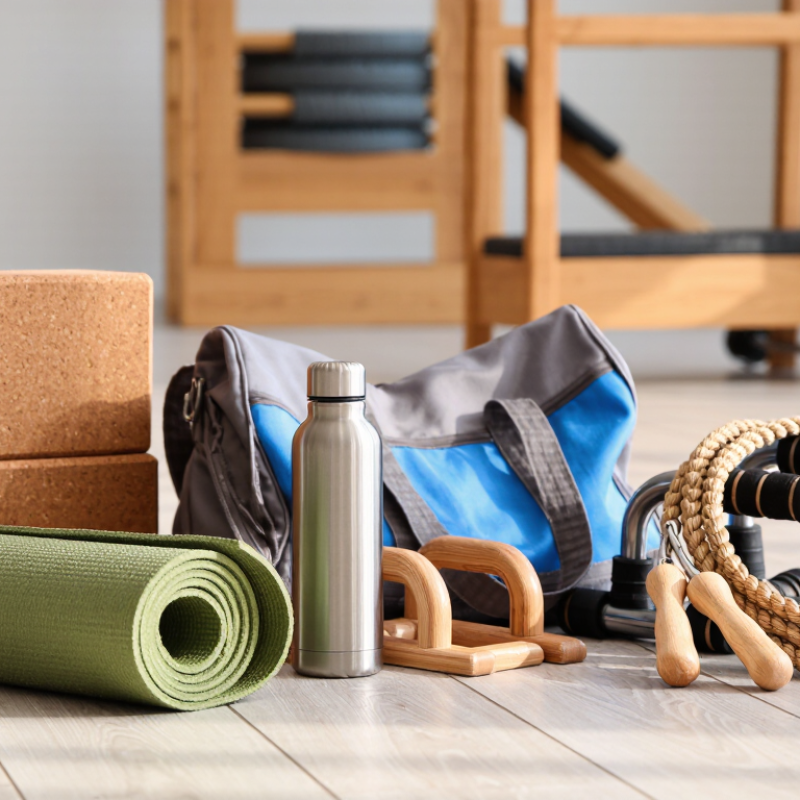
Top 10 Eco Friendly Alternatives to Plastic Gym Gear?
What Counts as Plastic Gym Gear and Why It Matters
Plastic gym gear includes more than obvious items like water bottles. Foam mats may contain PVC or EVA, resistance bands often use synthetic rubber, and workout clothes commonly contain polyester, nylon, or elastane. Shoes, padded gloves, and coated weights can also include plastic components. The material is not always visible. Check care labels and product details, especially when gear wears down or flakes.
The OECD’s Global Plastics Outlook (2022) reports that global plastic production reached 460 million tonnes in 2019, while plastic waste reached 353 million tonnes. Just 9% of that waste was ultimately recycled. Gym gear is only one small part of this picture, but frequent replacement adds to demand and disposal. A cracked mat or stretched band can be difficult to repair, and mixed materials may complicate recycling. Not every swap helps. A natural-material item with a short lifespan may be less useful than durable gear you already own.
Tips: Check what your gear is made from before buying. Choose repairable items, wash synthetic clothes less often, and air-dry them when practical. Replace worn-out pieces gradually, not all at once. A small habit, but worth testing.
Plastic gym gear includes equipment made wholly or partly from synthetic polymers such as PVC, EVA foam, polyethylene, polypropylene, nylon, polyester, and polyurethane. These materials can be durable and useful, but fossil-based production, persistent waste, possible fibre shedding, and mixed-material construction can make disposal and recycling difficult.
| # | Alternative | Common plastic item replaced | Material and practical benefits | Important trade-offs | Lower-impact use tip |
|---|---|---|---|---|---|
| 1 | Stainless-steel water bottle | Disposable or reusable plastic water bottle | Durable, reusable, and resistant to corrosion; stainless steel can be recycled where suitable collection facilities exist. | Mining and manufacturing require energy, and insulated bottles may use mixed materials or plastic seals. | Choose a repairable, single-wall bottle when insulation is not needed, and use it for years. |
| 2 | Cork yoga blocks | EVA-foam yoga blocks | Cork is harvested from the bark of cork oak trees without cutting down the tree; it offers a firm, grippy surface. | Weight, finish, and durability vary. Coatings or binders may affect repair and disposal options. | Look for a solid cork block with minimal coatings and keep it dry between uses. |
| 3 | Solid-wood yoga blocks | Foam yoga blocks | Wood can provide a stable, long-lasting support and may be repairable; responsibly sourced timber can be a renewable material. | Wood is heavier and less yielding than foam, so it may not suit every pose or user. Finishes and adhesives can vary. | Check for responsible wood sourcing and a simple finish; avoid using a block that is cracked or splintered. |
| 4 | Natural-rubber exercise mat | PVC- or EVA-based exercise mat | Natural rubber comes from rubber-tree latex and can offer grip and cushioning without relying solely on PVC or EVA. | Natural rubber is still a polymer, is not automatically compostable, and may contain additives. It is unsuitable for some people with latex allergies. | Check the full material list, avoid it if latex sensitivity is a concern, and follow the maker’s disposal guidance. |
| 5 | Cotton yoga strap | Nylon or polyester stretching strap | Cotton is a natural fibre and provides a simple, washable strap for stretching and yoga. | Cotton cultivation can use significant water and agricultural inputs; metal buckles or synthetic stitching may remain. | Choose a durable strap, wash only when needed, and air-dry it. |
| 6 | Hemp or cotton gym towel | Polyester or microfiber workout towel | Hemp and cotton are plant-based fibres and can absorb sweat without relying on a synthetic microfiber pile. | Growing, processing, and laundering still have environmental impacts; blends may include synthetic fibres. | Check the fibre label for blends and wash full loads at the recommended temperature. |
| 7 | Canvas or cotton gym bag | Polyester or nylon gym bag | Woven cotton or canvas can be sturdy and repairable, especially when the bag has a simple construction. | Fabric production has resource impacts, and waterproof coatings, linings, zips, or thread may contain plastics. | Choose an uncoated, repairable bag and mend seams or straps instead of replacing it. |
| 8 | Cast-iron or steel weights | Plastic-coated or plastic-filled dumbbells and weights | Solid metal weights are long-lasting and avoid a plastic outer shell or filler; metal is recyclable through appropriate scrap channels. | Metal extraction and processing require energy, and heavy equipment needs safe handling and storage. | Buy durable weights in the sizes you will use, and reuse or pass them on if your training needs change. |
| 9 | Wooden parallettes | Parallettes with plastic components or coatings | Responsibly sourced hardwood can make a durable frame for body-weight exercises; damaged wood may be repairable. | Wooden equipment needs sound construction and regular checks. Grips, feet, adhesives, and finishes may still contain synthetic materials. | Choose sturdy, repairable construction and inspect joints and surfaces before each use. |
| 10 | Natural-fibre jump rope with wood handles | Plastic-handled or synthetic-rope skipping rope | A cotton or hemp rope with wooden handles can reduce synthetic material in a basic jump rope. | Natural-fibre ropes may wear faster, absorb moisture, or perform differently from synthetic ropes; bearings or fittings may still be metal or plastic. | Use it on a smooth, dry surface and store it indoors to extend its life. |
“Plastic-free” is not guaranteed by a product’s main material alone: check labels for coatings, foam, synthetic stitching, grips, seals, and mixed-material parts. The most sustainable choice is often durable equipment that suits your needs, is maintained well, and is used for a long time.
Foam mats may contain PVC or EVA, while bands often use synthetic rubber. Polyester, nylon, and elastane are common in workout clothes. Plastic can hide in shoes, gloves, and coated weights.
Not necessarily. A durable item you already own may be better than a natural-material replacement that wears out quickly. It is easy to misjudge.
Natural-rubber mats can provide grip and cushioning, but heat and sunlight may make them brittle. Cork blocks feel firm and resist odors. Their edges can chip.
Organic cotton feels soft and handles frequent washing, though it may stay damp. Hemp is sturdy and can soften with use. Stitching still matters.
No. These materials are still plastic, but they may last well under repeated stretching. Check seams, coatings, and care instructions too.
Wash them only when needed, use cool water, and air-dry them when practical. Repair small tears early. The patch may look imperfect.
Check local textile or sporting-goods collection options. Mixed materials and foam can be difficult to recycle. A recycling symbol does not guarantee local acceptance.
Plastic gym gear includes items such as exercise mats, resistance bands, bottles, and accessories made from conventional plastics or synthetic materials. Their production, wear, and disposal can contribute to pollution and waste, so choosing alternatives with lower environmental impacts can be a meaningful step. To answer the question “what are the eco friendly alternatives to plastic gym gear,” this overview considers options such as natural rubber, cork, recycled materials, organic fibers, and responsibly sourced wood, while weighing factors like material sourcing, durability, performance, and ease of care.
No single material is best for every workout. A practical choice should suit the activity, offer reliable grip or support, and last with regular use. Cleaning and storing gear according to its material can help extend its lifespan, while repairing or reusing it may delay disposal. When an item can no longer serve its purpose, consider appropriate local recycling or disposal options rather than assuming every material is recyclable.

 Carpe fitness