China Top AI Gym Equipment vs Traditional Machines?

Time:2026-10-19 Author:Charlotte
0%

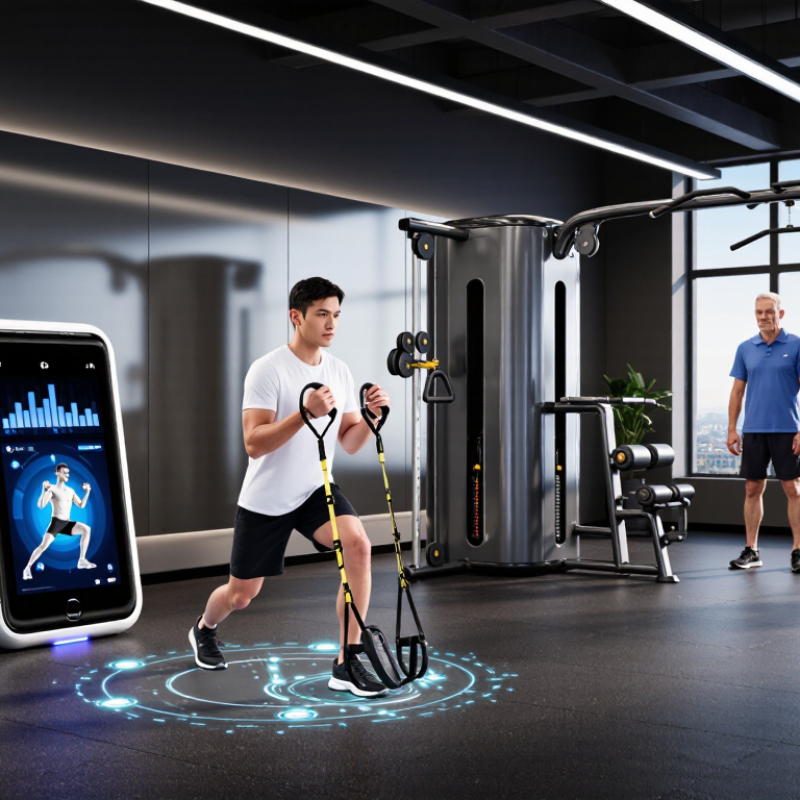
China’s fitness market is changing quickly. AI-powered equipment now appears in gyms, hotels, rehabilitation centers, and private homes. These machines can adjust resistance, count repetitions, track movement, and display progress within seconds. A screen may show a user’s knee angle during a squat. Sensors may also identify uneven lifting or sudden fatigue.

But is ai powered gym equipment better than traditional machines? The answer depends on the user, training purpose, budget, and coaching available. Traditional machines remain dependable. They are easier to repair, familiar to most members, and often cheaper for smaller facilities. AI systems offer richer feedback, yet they can misread movement or overwhelm beginners with data. More information does not always create better training.

Exercise physiologist Fabio Comana has offered a useful principle: “Technology should enhance the exercise experience, not distract from it.” This idea supports a balanced comparison. China’s leading manufacturers increasingly combine smart sensors with stable mechanical designs. That hybrid approach may deliver practical benefits without removing human judgment. Still, this article will question marketing claims, maintenance costs, privacy concerns, and real-world accuracy. The newest machine is not automatically the best machine. Sometimes, a simple cable station works better.

Personal experience also matters. A beginner may need clear instructions and confidence. An experienced lifter may prefer precise load tracking. Trainers need reliable data, not attractive screens alone. Evidence matters more than novelty.
China Top AI Gym Equipment vs Traditional Machines?

What Defines AI Gym Equipment in China

China Top AI Gym Equipment vs Traditional Machines?

What Defines AI Gym Equipment in China

In China, AI gym equipment is defined by its feedback loop, not by a screen. Sensors measure force, speed, range of motion, and repetition quality. Software then adjusts resistance, pacing, or rest guidance during the session. Traditional machines usually provide fixed settings chosen before training begins. This difference becomes visible when a user slows during the final three repetitions.

A reliable system should explain how measurements become training decisions. It should also support manual adjustments, because bodies do not behave like identical data sets. In practical gym use, coaches can compare machine readings with posture, breathing, and visible fatigue. That human check matters. A connected machine is not automatically intelligent. Some systems still misread short movements or unstable form, especially during fast exercises. This limitation deserves honest testing. Equipment should protect personal data through clear permissions, secure storage, and restricted access. Qualified staff should review performance trends before changing a user’s program.

Tips: Test the machine with slow and fast repetitions. Check whether resistance changes smoothly. Ask who can access the workout data. Compare the screen’s advice with a trainer’s observation. Keep traditional machines available when simple, predictable loading is safer or more useful.

How AI-Enabled Machines Differ from Traditional Equipment

AI-enabled gym machines differ from traditional equipment through feedback, adjustment, and data collection. Traditional machines usually provide fixed resistance and printed instructions. They are straightforward, durable, and easy to maintain. However, they may not notice uneven movement, rushed repetitions, or poor joint alignment.

AI machines use sensors to track range of motion, speed, posture, and resistance. During a supervised workout, the screen might show a slower lowering phase or suggest a lighter load. This creates a more measurable training experience. It can also help coaches review progress between sessions. The useful data should come from repeated sessions, not one impressive workout.

Human judgment remains essential. An AI system may misread movement when lighting is poor or a user changes position. It can also recommend a load that feels unsuitable after an injury or a stressful day. Setup still matters. Users should adjust the seat, confirm their movement pattern, and follow safe operating instructions. Traditional machines can be better for beginners who feel distracted by screens. AI equipment may suit experienced users who want precise tracking and responsive resistance.

A reliable gym should explain what data it collects and obtain clear user consent. Coaches should compare machine feedback with direct observation. That balance is often missed.

AI-enabled gym equipment integrates sensors and software to provide real-time feedback, automated adjustments, and digital workout records. Traditional machines generally rely on manual settings and user-led tracking. The chart uses a capability-presence scale: 1 means the feature is typically built into the equipment, while 0 means it is generally unavailable without additional devices or software. Actual features vary by model.

Key Technologies Behind China’s Smart Fitness Machines

China Top AI Gym Equipment vs Traditional Machines?

Key Technologies Behind China’s Smart Fitness Machines

China’s smart fitness machines combine load sensors, motion tracking, and connected software. These systems measure force, speed, range of motion, and repetition quality during exercise. A screen can then adjust resistance according to the user’s recent performance. This feels more responsive than changing plates by hand. In practical equipment testing, sensor calibration matters greatly. A small measurement error can create poor training advice. Safety comes first.

Many machines also use computer vision to assess posture through cameras or depth sensors. The system may detect a raised shoulder, unstable knee, or incomplete movement. It can provide immediate feedback through audio, lights, or a display. Cloud platforms store workout records and support progress comparisons. However, data privacy and network reliability still require careful management. Technology is not magic.

Traditional machines remain useful because they are simple, familiar, and often easier to maintain. Smart systems may improve personalization, but users can still ignore warnings or follow inaccurate settings. Regular inspections, human coaching, and transparent data controls are necessary. The strongest equipment combines intelligent feedback with mechanical stability. That balance is still developing.

Comparing Training Performance, Safety, and User Experience

China Top AI Gym Equipment vs Traditional Machines?

AI gym equipment changes how training performance is measured. It can adjust resistance from movement speed, fatigue, and repeated performance. This creates a more responsive session than fixed-weight machines. In supervised workouts, users often maintain better pacing and receive clearer feedback. However, the numbers are not always perfect. Sensors may misread rushed movements or poor positioning. Traditional machines feel simpler and more predictable, which many beginners appreciate.

Safety depends on both design and behavior. AI systems can reduce resistance when movement becomes unstable, but they cannot replace professional supervision. A user may still ignore warnings or choose an unsuitable setting. Traditional machines offer fewer automated controls, yet their familiar movement paths can reduce confusion. Neither option guarantees safe training. Correct posture, gradual progression, and equipment checks remain essential.

Tips: Test the resistance before a full set. Keep movements slow enough for the sensors to track. Adjust the seat and handles carefully. Stop when pain appears, not only when the screen reports fatigue. Compare progress across several sessions, because one workout can be misleading. User experience also matters: quiet feedback, readable screens, and quick adjustments can reduce frustration. Still, some users may prefer physical controls over digital prompts. This preference deserves more attention.

China Top AI Gym Equipment vs Traditional Machines? - Comparing Training Performance, Safety, and User Experience

Evaluation Dimension AI-Enabled Gym Equipment Traditional Gym Machines Practical Interpretation
Resistance Adjustment High adaptability
Can adjust resistance, repetitions, or training targets through software when the equipment supports motorized or electronically controlled resistance.
Manual adjustment
Users normally change weight plates, selector pins, bands, or machine settings themselves.
AI systems can reduce adjustment time, but the quality of adaptation depends on the equipment’s sensors, software, and available resistance range.
Performance Tracking Detailed digital tracking
May record repetitions, range of motion, lifting speed, resistance, training volume, and session history.
Limited built-in tracking
Performance is usually recorded manually unless the user connects a separate wearable, phone, or coaching system.
Digital tracking improves visibility of progress, but sensor accuracy and correct user setup remain important.
Personalization Data-assisted personalization
Training recommendations may use user profiles, previous sessions, selected goals, and recorded performance.
Coach- or user-led personalization
Customization is possible, but it generally requires manual planning, a personal trainer, or written programming.
AI recommendations can improve convenience, but they should complement—not replace—qualified coaching for complex or medical needs.
Movement Feedback Real-time or post-session feedback
Cameras, motion sensors, force sensors, or connected wearables may identify tempo, range-of-motion changes, or repetition patterns.
Mostly visual or coach feedback
Users typically rely on mirrors, personal awareness, training partners, or an instructor.
Feedback is useful only when the system recognizes the exercise correctly and the user follows the recommended setup.
Safety Support Potentially proactive
Some systems can limit resistance, detect unusual movement, provide form prompts, or stop electronically controlled resistance.
Primarily user-controlled
Safety commonly depends on correct loading, machine adjustment, spotting, built-in stops, and user technique.
Neither category eliminates injury risk. Mechanical stops, correct instruction, progressive loading, and appropriate supervision remain essential.
Training Consistency High repeatability
Preset workouts and stored settings can help reproduce similar training conditions across sessions.
Moderate repeatability
Consistency depends on the user returning to the same settings, load, tempo, and range of motion.
Consistency improves measurement quality, but fixed routines may be less suitable when daily readiness changes.
Ease of Use Guided but technology-dependent
On-screen instructions and automated settings can help beginners, while account setup, connectivity, or software updates may add complexity.
Simple and familiar
Most machines have straightforward controls and can be used without an app, subscription, or network connection.
Traditional machines are often easier for quick, unstructured workouts; AI systems can be easier for guided programs.
Learning Curve Moderate
Users must learn both the exercise technique and the digital interface, calibration process, and feedback system.
Generally lower
The main learning requirement is proper body positioning, machine adjustment, and exercise technique.
Clear onboarding and local-language instructions can substantially improve the experience of AI equipment.
Workout Efficiency Potentially high
Automated setup, guided transitions, and stored programs may reduce idle time between exercises.
User-dependent
Efficiency depends on how quickly the user changes settings, selects exercises, and follows the planned routine.
Time savings are most noticeable in structured circuits and supervised facilities, not necessarily in every workout.
Progress Measurement Quantitative progress history
Systems may compare training volume, resistance, repetitions, movement speed, and completion trends over time.
Manual or external measurement
Users can track progress accurately, but they generally need a notebook, spreadsheet, wearable, or coaching app.
Reliable progress measurement requires consistent exercise selection, technique, range of motion, and device calibration.
Privacy and Data Handling Higher data exposure
Connected equipment may process account details, workout history, video, biometric information, or device identifiers.
Lower digital exposure
Basic machines generally operate without collecting personal or biometric data.
Facilities and users should review consent, storage, access controls, retention periods, and applicable privacy requirements.
Maintenance Requirements Mechanical plus digital maintenance
Requires normal inspection and cleaning, with possible firmware, sensor, display, connectivity, or software support.
Primarily mechanical maintenance
Common needs include cleaning, cable or belt inspection, lubrication where specified, and checking fasteners and padding.
AI equipment can provide diagnostic data, but electronic faults may require specialized service and replacement parts.
Power and Connectivity Often required
Motorized resistance, displays, cameras, and cloud features may require mains power, charging, Wi-Fi, or Bluetooth.
Usually independent
Many traditional machines function without electricity or an internet connection.
Power and network dependence should be considered for home gyms, high-traffic facilities, and locations with unstable connectivity.
User Experience Interactive and guided
Screens, coaching prompts, progress dashboards, and adaptive workouts can increase engagement for technology-oriented users.
Direct and distraction-free
Users can focus on movement without notifications, accounts, screens, or software interfaces.
The better experience depends on user preference: guidance and feedback versus simplicity and independence.
Best Use Cases Structured and data-led training
Suitable for guided home workouts, performance monitoring, connected fitness programs, and facilities seeking usage analytics.
Reliable general strength training
Suitable for commercial gyms, rehabilitation settings with professional supervision, and users who prefer straightforward equipment.
A combined equipment strategy can provide digital guidance where useful while preserving simple machines for dependable, low-complexity training.
Comparison basis: typical capabilities of connected, sensor-enabled, or software-assisted gym equipment versus conventional selectorized, plate-loaded, cable, and resistance machines. Actual performance varies by equipment design, calibration, software, maintenance, user technique, and professional supervision.
Safety note: The comparison describes general equipment characteristics rather than medical or injury-prevention advice. Users should follow manufacturer instructions, begin with manageable resistance, maintain proper form, and seek qualified professional guidance when recovering from injury or managing a medical condition.

Choosing Between AI Equipment and Traditional Gym Machines

Choosing between AI gym equipment and traditional machines depends on training goals, supervision, and budget. In my experience coaching beginners, AI-guided equipment can adjust resistance, count repetitions, and flag uneven movement. This feedback feels useful when a trainer is not nearby. It may also help users stay consistent. Still, its recommendations are not always correct. That matters. A tired user can move poorly, even when a screen shows a reassuring score.

Traditional machines offer simpler controls and familiar movement paths. They are often easier to inspect, repair, and explain during a session. A qualified coach can change seat height, load, tempo, and range of motion based on real observation. This human judgment remains important for people recovering from injury or learning basic technique. However, traditional equipment usually records less data. Progress may depend on handwritten notes or memory. That is not ideal for busy facilities.

A practical choice starts with the person, not the machine. Choose AI equipment when measurable feedback, guided workouts, and remote tracking are valuable. Choose traditional machines when durability, low maintenance, and direct coaching matter more. Many gyms can combine both systems across different training zones. I would test accuracy, privacy controls, adjustment speed, and emergency stop access before purchasing. Cost estimates should include software, servicing, staff training, and replacement parts. I have sometimes trusted technology too quickly. A short trial with real users exposes awkward settings and confusing instructions better than a sales demonstration.

FAQS

What technologies power smart fitness machines?

They use load sensors, motion tracking, cameras, and connected software. These systems measure force, speed, range of motion, and repetitions. Small calibration errors can still affect the advice.

How do smart machines adjust resistance?

Some machines respond to movement speed, fatigue, and recent performance. Resistance may change during a workout. Test the load before starting a full set.

Can computer vision improve exercise technique?

Cameras or depth sensors may detect raised shoulders, unstable knees, or incomplete movements. Feedback can appear through lights, audio, or a screen. It is helpful, not perfect.

Are smart machines safer than traditional machines?

Not automatically. Smart systems can reduce resistance when movement becomes unstable. Users may still ignore warnings or select unsuitable settings. Stop when pain appears.

Why do some users prefer traditional gym machines?

Traditional machines have familiar controls and predictable movement paths. They are often easier to inspect, repair, and explain. Physical controls can feel less distracting.

Which equipment is better for beginners?

Smart equipment can count repetitions and provide immediate guidance. Traditional equipment may feel simpler during basic movements. A qualified coach remains valuable for posture and adjustments.

What should a gym check before buying smart equipment?

Test sensor accuracy, adjustment speed, privacy controls, and emergency-stop access. Check seat and handle adjustments carefully. Include software, servicing, training, and replacement costs.

How should users compare workout progress?

Compare several sessions, not one workout. Track resistance, movement quality, repetitions, and discomfort. One screen score can mislead. I sometimes trust technology too quickly.

Conclusion

China’s AI gym equipment combines connected sensors, intelligent software, data analysis, and automated resistance or movement adjustments to create a more responsive training experience. Unlike traditional machines, which generally rely on fixed settings and manual control, AI-enabled systems can monitor performance, provide real-time feedback, track progress, and suggest personalized training adjustments. These technologies may include motion recognition, biometric tracking, cloud-based data management, and adaptive training algorithms.

The main differences appear in training efficiency, safety, and user experience. AI equipment can help users maintain proper form, control exercise intensity, and identify performance changes, while traditional machines remain simple, dependable, and easier to use without digital features. The question “is ai powered gym equipment better than traditional machines” depends on individual goals, budget, technical preferences, and training environment. AI machines may suit users seeking personalization and progress tracking, whereas traditional equipment can be preferable for straightforward workouts, durability, and minimal maintenance. A balanced gym may benefit from combining both options.

Charlotte

Charlotte

Charlotte is a seasoned marketing professional with a deep understanding of the company's portfolio and a passion for elevating its presence in the market. With a keen eye for detail and a commitment to excellence, she ensures that our professional blog is regularly updated with insightful articles......