Best Heavy-Duty Floor Matting Options for Your Needs?

Time:2026-03-16 Author:Sienna
0%

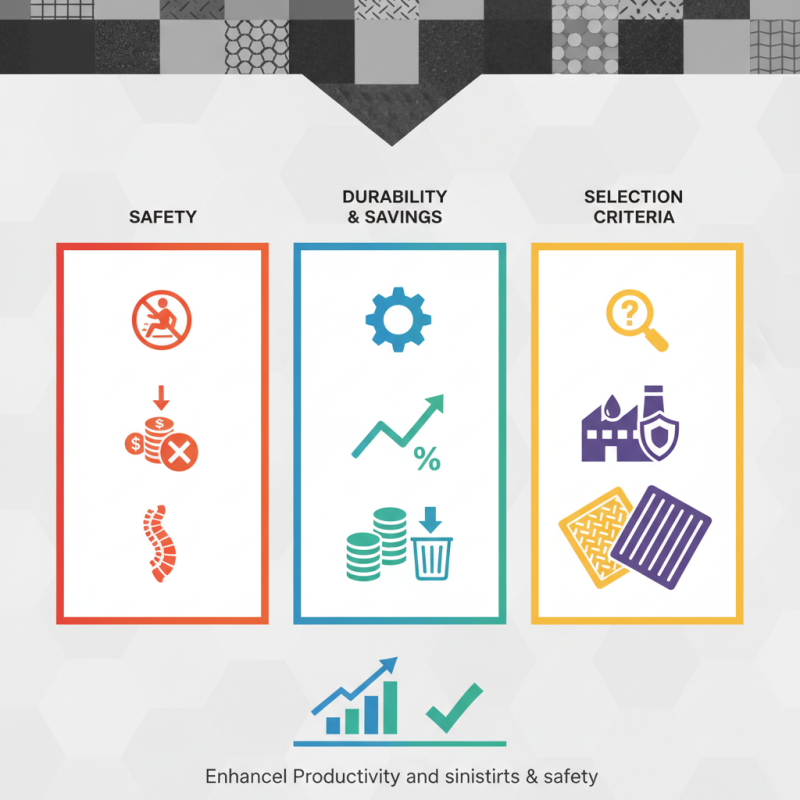
Choosing the right Heavy-Duty Floor Matting is crucial for various settings. The right matting can reduce slips and falls significantly. According to the National Floor Safety Institute, over 8 million slip-and-fall incidents occur annually in the U.S. These accidents lead to serious injuries, often costing businesses thousands.

Heavy-Duty Floor Matting is not just a luxury; it’s an essential item in many workplaces. Durable materials can withstand high foot traffic and heavy equipment. This durability also means lower replacement costs over time. Reports indicate that businesses using proper matting save up to 20% on maintenance costs.

However, not all mats are created equal. Some may look attractive but fail to perform under pressure. Choosing the wrong product can lead to dissatisfaction and safety issues. Thus, it’s vital to understand your specific needs before selecting Heavy-Duty Floor Matting. Assess your environment and consider factors like cleanliness and safety standards. The right choice can greatly enhance safety and productivity.
Best Heavy-Duty Floor Matting Options for Your Needs?

Types of Heavy-Duty Floor Mats for Different Environments

When choosing heavy-duty floor matting, it's essential to consider the specific environment. Different settings require unique features. For instance, industrial areas often deal with chemicals and heavy machinery. Mats made from rubber provide great resistance and durability. They can withstand harsh conditions while maintaining safety.

In contrast, commercial spaces benefit from mats that focus on aesthetics and comfort. Anti-fatigue mats are popular in environments like retail or restaurants. Data suggests that these mats can reduce fatigue by 50% over long periods of standing. Such an improvement can enhance worker productivity.

Tips: Assess the floor mat's texture. A non-slip surface helps prevent accidents. Also, regularly cleaning the mats increases their lifespan. Using mats in high-traffic areas is crucial. They can absorb shock and reduce wear on flooring.

Knowing the right mat for your need is not always easy. Some choices may seem ideal at first. However, they might not perform as expected over time. Ongoing evaluation of the mat's condition is key to maintaining safety and functionality.

Key Features to Consider When Choosing Floor Matting

Choosing the right heavy-duty floor matting is essential for various environments. Consider factors like material, thickness, and purpose. Rubber mats offer excellent durability and grip. Foam mats provide comfort but may wear out quickly. Assess the mat's ability to withstand heavy foot traffic and spills. Some mats can absorb moisture, while others may channel liquids away.

Think about the maintenance requirements. Some mats can be cleaned easily, while others may hold dirt. The texture plays a role too. A textured surface can enhance traction but may accumulate debris. Look for options that are easy to reposition or replace. Don't overlook the importance of slip resistance, especially in wet areas.

Lastly, consider your aesthetic needs. Color and design matter, especially in customer-facing spaces. It’s essential to balance functionality and visual appeal. Reflect on the environment where the mats will be used. Each setting presents unique challenges, thus influencing your choice. Investing in the right matting will protect your floors and enhance safety.

Top Brands and Products for Heavy-Duty Floor Mats

When choosing heavy-duty floor mats, understanding the top brands and products is essential. Industry reports show that durable mats can significantly reduce slips and falls. In fact, organizations that use heavy-duty floor mats report a 20% decrease in workplace accidents. That’s a considerable statistic for businesses aiming for safety.

Not all mats are created equal. Some focus on cushioning, while others excel in traction. Thick rubber mats withstand wear and tear in high-traffic areas. Moreover, options with raised patterns enhance grip, capturing dirt and moisture effectively. Yet, not all heavy-duty mats are ideal in every situation. Some may fade under intense sunlight or lose their shape over time. It's crucial to consider the specific conditions where mats will be used.

Working environments can vary widely, and so do mat requirements. While one type might thrive in industrial settings, it could be ineffective in commercial spaces. Understanding these nuances helps in selecting the right mat. Many users overlook the maintenance needs of mats. Regular cleaning can prolong their life significantly. Reports show that neglected mats can harbor bacteria and dirt, counteracting their safety benefits.

Installation Tips for Heavy-Duty Floor Matting

When installing heavy-duty floor matting, preparation is key. Start by assessing the site. Ensure the surface is clean, dry, and free from debris. An Industry report indicates that 30% of installation failures stem from improper surface preparation. It’s crucial to measure the area accurately. This helps in selecting the right mat size. A poorly fitted mat can create hazards, such as tripping.

Adhesives are often necessary for effective installation. Always choose the right type for your matting materials. Different adhesives have varying strengths and drying times. A study shows that using the incorrect adhesive can reduce mat longevity by up to 50%. Follow the manufacturer’s instructions closely. If you encounter air bubbles during installation, fix them immediately. Ignoring such imperfections can compromise the mat's effectiveness.

After installation, monitor the mat’s performance. Check for wear and tear regularly. Heavy-duty mats should endure high foot traffic and stress. However, no mat is invincible. If you notice shifts or wrinkles, readjust promptly. Maintaining your mat not only ensures safety but can also prolong its lifespan significantly. Regularly revisiting these aspects will enhance performance and safety.

Maintenance and Care for Long-lasting Floor Mats

Maintaining heavy-duty floor mats is crucial to extend their lifespan and preserve functionality. Regular cleaning is essential. According to industry reports, neglecting maintenance can reduce a mat's life by nearly 50%. Simple weekly vacuuming can effectively remove dirt and debris, but deeper cleaning is sometimes necessary. A steam cleaner works well for stubborn stains and spills, keeping mats looking new and hygienic.

Storage is also important. Mats should be rolled tightly and stored flat to avoid creases. A report from the Floor Safety Institute notes that improper storage can lead to wear or even safety hazards. While mats can endure heavy traffic, wear patterns can develop without proper care. Routine rotations can help distribute traffic, particularly in high-use areas.

Avoiding certain chemicals is wise. Harsh cleaners can degrade mat materials, leading to premature wear. Instead, use gentle, pH-balanced products. Not every cleaning solution is suitable for all types of mats. Always test a small area first to assess compatibility. Taking these steps can enhance mat longevity, ultimately saving costs and improving safety.

FAQS

: What materials are best for heavy-duty floor mats in industrial settings?

: Rubber mats provide excellent durability and resistance to chemicals and heavy machinery.

How can anti-fatigue mats benefit commercial spaces?

They can reduce fatigue by up to 50%, enhancing productivity in environments like retail and restaurants.

Why is slip resistance important in floor mats?

A non-slip surface helps prevent accidents, especially in wet or high-traffic areas.

What maintenance practices can extend the life of floor mats?

Regular cleaning and weekly vacuuming are essential to remove dirt and debris.

How should floor mats be stored to avoid damage?

Mats should be rolled tightly and stored flat to prevent creases and potential safety hazards.

Can all cleaning products be used on any type of mat?

No, harsh cleaners can degrade mat materials. Use gentle, pH-balanced products instead.

What factors should be considered when choosing floor mats?

Consider material, thickness, texture, and maintenance needs to ensure they meet your environment's requirements.

How important is aesthetics in selecting floor mats?

Color and design matter, especially in customer-facing areas, but functionality should not be overlooked.

What might happen if floor mats are not regularly evaluated?

They may not perform as expected over time, compromising safety and effectiveness.

How can wear patterns develop on floor mats?

Without proper care and routine rotations, high-use areas may show wear patterns.

Conclusion

When selecting heavy-duty floor matting, it's essential to consider various types designed for different environments, such as industrial settings, commercial spaces, and home use. Each type of matting offers unique features tailored to withstand high traffic and impact, ensuring durability and safety. Key features to look for include slip resistance, ease of cleaning, and material strength, which can significantly affect the mat's performance and longevity.

Additionally, proper installation techniques are vital for maximizing the effectiveness of heavy-duty floor mats. Following recommended installation guidelines can enhance safety and functionality. Regular maintenance is also crucial; routine cleaning and inspection can help extend the life of floor mats, ensuring they continue to perform well over time. By understanding these aspects, you can make an informed decision and choose the right heavy-duty floor matting for your needs.

Sienna

Sienna

Sienna is a skilled marketing professional with a deep expertise in our company’s core products and services. With a passion for innovation and detail, she plays a pivotal role in crafting insightful blog posts that not only highlight the unique features of our offerings but also provide valuable......